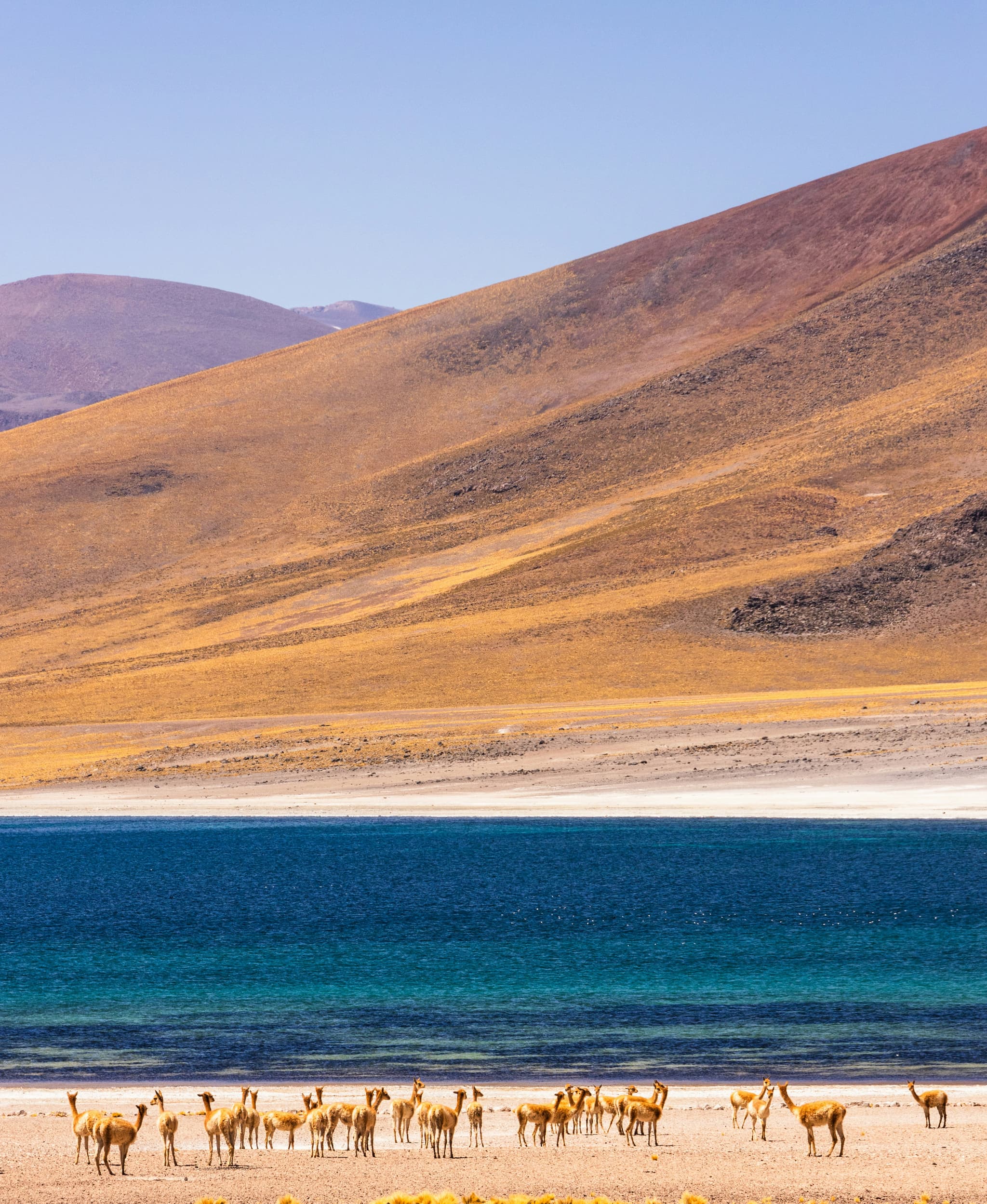
The Atacama Desert receives less than 1mm of rainfall per year and sits at over 2,400 metres above sea level. The combination of altitude, aridity and near-zero light pollution produces night skies so clear that professional observatories have been built here — and the same conditions are available to anyone sleeping in a campervan 30 minutes outside San Pedro.
Where to park for the best skies
The key is distance from San Pedro de Atacama, which has enough street lighting to create a faint glow on the horizon. Drive 15–20 km north on the road toward the Salar de Tara, or 10 km south toward the Valle de la Luna, and pull off the road at any turnout. The gravel flats in the Atacama are firm and flat — parking a campervan is straightforward.
Tip
Check the moon phase before you go. A full moon washes out fainter stars. The new moon period gives the darkest skies.
What you can see
From the Southern Hemisphere, you can see parts of the night sky invisible from Europe or North America. The Milky Way core is visible from April to September and is extraordinary — a dense river of light across the entire sky. The Magellanic Clouds (dwarf galaxies orbiting the Milky Way) are visible to the naked eye. Jupiter and Saturn's rings and moons are visible with binoculars.
What to bring
- A red-light torch (preserves night vision, unlike white light)
- Warm layers — temperatures drop to 5°C even in summer
- A reclining camp chair or sleeping mat to lie back on
- Binoculars (8×42 or 10×50) — enormous difference vs naked eye
- A star map app set to your location (SkySafari or Stellarium)
Guided tours vs going it alone
San Pedro has several excellent astronomy tour operators — SPACE and Astro Atacama are the most reputable. A guided tour adds context: a trained astronomer will point out constellations, explain what you're looking at through the telescope and answer questions. But if you just want the experience of lying under the Milky Way with nobody around, driving your campervan 20 minutes out of town is free and equally spectacular.